Crypto Market Recap: Bitcoin Dips Below $76K as Fear Hits Extreme Lows on May 27, 2026
wealthvista.top Editorial · May 27, 2026 · 17 min read
Market Overview
The global cryptocurrency market found itself under renewed pressure on Wednesday, May 27, 2026, as a combination of macro headwinds, derivatives liquidations, and profit-taking conspired to push prices lower across the board. According to data from CoinCodex, the total crypto market capitalization slipped from $2.55 trillion to approximately $2.53 trillion over the past 24 hours, representing a decline of roughly 0.83%.CoinGecko data placed the global market cap slightly higher at $2.62 trillion with a 1.31% single-day decline, with Bitcoin accounting for approximately $1.52 trillion of that total. The bifurcation between data sources reflects the inherent challenges in capturing a market that operates around the clock across global exchanges, but the directional picture is unambiguous: the market is in retreat.
The day’s most significant macro catalyst was a pronounced rotation of capital from digital assets into traditional equities. The S&P 500 closed at a record high on Tuesday, May 26, and traders responded by pulling liquidity out of the crypto complex in favor of stocks. This cross-asset correlation has become an increasingly dominant force in crypto markets since 2024, and its reassertion on May 27 delivered a clear bearish signal. Bitcoin in particular broke below several critical technical support levels, a move that accelerated stop-loss selling and compounded the downward pressure on already-skittish markets.
Trading volume across the ecosystem was reported at approximately $318.73 billion over 24 hours, with that figure also declining in step with the broader market contraction. The volume decline is noteworthy because it suggests the selloff, while sharp in percentage terms for certain tokens, is not being accompanied by the kind of panicked, high-volume capitulation that would typically characterize a true market bottom. Instead, the price action is consistent with a orderly rotation and profit-taking environment, rather than a disorderly crisis-driven dump.
Bitcoin dominance stood at approximately 57.99% according to CoinGecko, underscoring the continued preference for Bitcoin’s relative safety over smaller altcoins during periods of uncertainty. Stablecoins represented about 12.16% of the total market cap, or roughly $319 billion, a figure that reflects significant dry powder sitting on the sidelines waiting for better entry opportunities.
The Crypto Fear & Greed Index registered a reading of 25 on May 27, 2026, according to data from multiple tracking platforms including MacroMicro and FearGreedTracker. This score places the market firmly in “Extreme Fear” territory, a zone that historically correlates with capitulation among retail participants and accumulation by institutional operators. The gap between Bitcoin’s own fundamentals, including ongoing ETF inflows and growing institutional custody solutions, and the prevailing price action reflects the degree to which exogenous macro factors are currently dominating crypto-specific valuation drivers. For contrarian investors, a Fear & Greed reading of 25 is precisely the kind of reading that has historically marked attractive entry points, though the path from “Extreme Fear” to recovery is rarely smooth or linear.
 Image source: Unsplash
Major Coins and Top Movers
Bitcoin (BTC) was trading at approximately $75,478 to $75,736 as of May 27, 2026, depending on the exchange and timestamp, representing a decline of roughly 1.55% to 1.79% over 24 hours. The cryptocurrency touched levels as low as $75,202 during the session before finding modest support, breaking below key technical levels that had previously acted as floor zones. With a market capitalization of approximately $1.52 trillion and $35.14 billion in traded volume over 24 hours, BTC remains by far the dominant force in the crypto market by every metric. Its correlation with the S&P 500, which hit a record close on May 26, continues to be a double-edged sword: when equities rally, crypto often struggles to attract independent flows.
Ethereum (ETH) was quoted in a range between $2,074 and $2,081 per token as of the same date, with 24-hour volume reported between $6.46 billion and $14.87 billion depending on the data source. CoinMarketCap’s AI analysis described ETH as down 0.53% in 24 hours, with the decline attributed to a “massive derivatives liquidation cascade that wiped out leveraged long positions.” Ethereum’s price showed a low of $2,057.52 and a high of $2,135.38 within the trading day, reflecting intraday volatility even within a relatively tight range. The ETH/BTC ratio remained under pressure as Bitcoin’s dominance showed no signs of ceding ground to altcoins during this risk-off episode.
Solana (SOL) and XRP were not immune to the broader market weakness, though both maintained relatively resilient profiles compared to smaller tokens. Solana has been building a narrative around its growing DeFi ecosystem and high-throughput infrastructure, but the market-wide risk-off environment limited its ability to attract new buying interest. XRP, meanwhile, continued to be influenced by ongoing regulatory proceedings and any headlines related to the Securities and Exchange Commission’s evolving posture toward digital assets. Both tokens were trading with single-digit percentage losses on the day, significantly better than the 30-50% collapses seen among the top losers.
The top gainers on May 27 were dominated by smaller tokens that posted eye-popping moves: REQUSDT surged +37.33% to $0.08830, OSMOUSDT climbed +24.11% to $0.06640, KDAUSDT rose +17.65% to $0.00600000, IO.NET gained +16.79% to $0.17950, UTKUSDT added +16.23%, and PHAUSDT posted +15.07%. Fetch.ai, Worldcoin (WLD), LUNCUSDT, and Sei rounded out the top gainers with additional double-digit percentage moves. These gains, while impressive in isolation, should be viewed in the context of the broader market’s weakness: they appear to represent idiosyncratic token-specific catalysts rather than a coordinated altcoin recovery.
The top losers told a starker story, with much larger-cap or previously popular tokens posting devastating declines: ACAUSDT crashed -51.35% to $0.00180000, DEGOUSDT fell -50.88% to $0.02800, SXPUSDT dropped -45.00%, PHBUSDT sank -40.43%, ATAUSDT shed -40.00% to $0.00150000, and DENT fell -36.67% to $0.00003800. FIOUSDT, FORTHUSDT, Neutron, and Streamr also appeared among the worst performers. These outsized losses highlight the dangerous combination of low liquidity and high leverage that continues to characterize the crypto derivatives market, where cascading liquidations can turn already-fragile tokens into free-falling assets within hours.
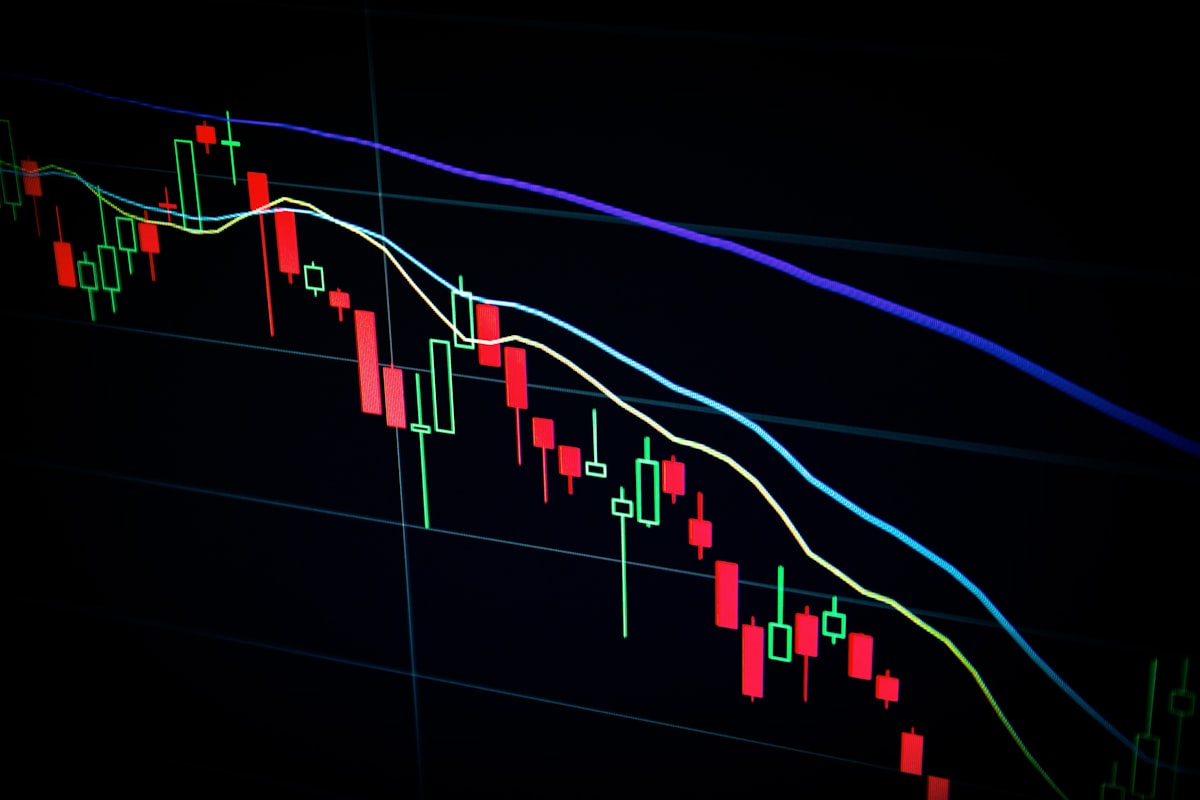 Image source: Unsplash
Top 10 Crypto Events of the Past 24 Hours
Event 1: Derivatives Liquidation Cascade Triggers Broad Market Sell-Off
The most significant market event of May 27, 2026 was a cascade of leveraged long position liquidations that rippled through the crypto derivatives complex. According to CoinMarketCap’s AI analysis, a “massive derivatives liquidation cascade” specifically targeted Ethereum-related positions, though the broader impact extended across the entire market cap spectrum. When leverage is concentrated in one direction, as it has been in the months leading up to May 2026’s attempted recovery, any catalyst can trigger an auto-liquidations chain reaction. The mechanics are straightforward: as prices drop, over-leveraged positions are automatically closed by exchanges, which generates additional selling pressure, which in turn triggers more liquidations. This cascade effect is what CoinMarketCap’s analysis explicitly cited as driving Ethereum’s decline and dragging the broader market with it. The event underscores the structural immaturity of the crypto derivatives market, where risk management tools remain rudimentary compared to traditional finance, and where the 24/7 nature of trading leaves no quiet period for markets to reset organically. Traders who survived the liquidation cascade were left with significantly reduced positions or were forced to meet margin calls, reducing overall market depth heading into the next trading session.
Event 2: S&P 500 Record Close Ignites Crypto-to-Equities Capital Rotation
On Tuesday, May 26, 2026, the S&P 500 closed at a record high, and market participants responded the following day by rotating capital out of the cryptocurrency market and into traditional equities. This cross-asset correlation has become one of the defining features of the 2024-2026 crypto market environment. The mechanism is intuitive: crypto is perceived by institutional and quasi-institutional participants as a risk asset that sits alongside growth equities in their risk frameworks. When equities are setting new highs, the opportunity cost of holding crypto rises, and capital flows accordingly. On May 27, this rotation accelerated as traders who had accumulated crypto positions during the preceding weeks of sideways or declining prices decided to lock in losses or take profits in favor of the certainty of equity market exposure. The rotation was particularly pronounced in Bitcoin, which broke below critical technical support levels as part of this capital flight. The intensity of the rotation underscores how dependent the current crypto market is on traditional market tailwinds, and how fragile the recovery from 2025’s lows remains when equities themselves face any headwinds.
Event 3: Crypto Fear and Greed Index Plunges to 25 — Extreme Fear Returns
The Crypto Fear & Greed Index registered a reading of 25 on May 27, 2026, a level that places the market in “Extreme Fear” territory and represents a significant deterioration from neutral or greedy readings recorded just weeks earlier. Multiple independent trackers, including MacroMicro and FearGreedTracker, confirmed the 25 reading, which historically correlates with capitulation events and heavy selling by retail participants. The divergence between the Fear & Greed reading and the underlying fundamentals of Bitcoin — specifically its continued institutional adoption, expanding ETF infrastructure, and growing use as a treasury reserve asset by corporations — is striking. This gap between price-based sentiment and fundamental developments is a hallmark of macro-driven market dislocations. Historically, an index reading in the 20-30 range has preceded recoveries of 50% or more within months, but the path from fear to greed is rarely linear and often passes through additional rounds of selling before sentiment stabilizes. The May 27 reading of 25 is also notable because it mirrors the index levels seen during the most acute phases of 2022’s crypto winter, suggesting that while the market structure has matured significantly, the underlying investor psychology remains remarkably consistent.
Event 4: Near Protocol (NEAR) Leads Downside with ~10% Profit-Taking Correction
Near Protocol (NEAR) emerged as one of the day’s most prominent large-cap losers, falling approximately 10% in what analysts characterized as profit-taking following a sharp April-May rally that had pushed the token to multi-month highs. Near Protocol has been one of the more active Layer 1 blockchains in terms of developer activity and decentralized application deployment, and its rally in the preceding weeks had been driven by increased interest in its AI-aligned blockchain initiatives and growing DeFi TVL. The May 27 pullback was described by analysts as orderly profit-taking rather than panic selling, with the decline primarily attributed to short-term traders locking in gains rather than fundamental rejection of the project’s long-term thesis. NEAR’s ~10% decline stands out in the context of the day’s major coins, which were generally down only 1-2%, suggesting that mid-cap Layer 1 tokens remain significantly more volatile and susceptible to momentum-driven selling than Bitcoin or Ethereum. The correction in NEAR illustrates the continued premium placed on liquidity by crypto traders: even a fundamentally strong project with positive catalysts can experience outsized drawdowns when broader market conditions deteriorate.
Event 5: Bitcoin ETF Inflows Remain Under Pressure as Institutional Caution Dominates
Bitcoin exchange-traded funds continued to face net outflow pressure into May 27, 2026, as institutional investors adopted a cautious posture amid the broader market weakness. While ETF flow data for the specific day was constrained by bot-detection challenges on financial data platforms, the broader trend visible in the weeks leading up to May 27 had been one of reduced institutional demand compared to the record-breaking inflows of late 2024 and 2025. The combination of a market-wide correction, record-high equity valuations reducing the relative attractiveness of crypto, and broader macroeconomic uncertainty about Federal Reserve policy has created an environment where institutional allocators are pruning rather than expanding their crypto exposures. ETF outflows are significant because they represent the primary on-ramp for institutional capital into the Bitcoin market; when ETFs see consistent outflows, the market loses one of its most reliable sources of new demand. The market’s dependence on these flows was exposed during May 2026, as the absence of institutional buying pressure left Bitcoin more exposed to the macro-driven selling described above. The near-term outlook for ETF flows will depend heavily on whether the Federal Reserve signals a continuation of its current rate environment or pivots to rate cuts that would make risk assets relatively more attractive.
Event 6: US CFTC Crypto Sprint Enters Year-Two as Regulatory Architecture Takes Shape
The Commodity Futures Trading Commission’s “Crypto Sprint” initiative, launched by Acting Chairman Caroline Pham in August 2025, entered its second year as of May 2026, with the agency continuing to focus on digital asset regulatory clarity across derivatives, spot markets, and DeFi protocols. The National Law Review’s analysis of the initiative described a structured 12-month effort to address regulatory gaps in the crypto complex, with the CFTC working in parallel with the SEC’s own digital asset initiatives. This dual-agency regulatory effort has been one of the defining policy themes of 2025-2026, and its direction continues to shape market sentiment. Clarity on whether specific tokens are securities versus commodities has been one of the most anticipated outcomes of this regulatory push, as the absence of clear definitions has been a persistent source of legal risk for exchanges and DeFi protocols. The regulatory environment in 2026 is dramatically more structured than it was in the 2020-2023 period, but the transition has not been painless, and enforcement actions against specific projects continue to create uncertainty for smaller tokens.
Event 7: UK Crafting Fintech-Friendly Crypto Laws as EU MiCA Pressure Mounts
As the United States continues its regulatory sprint, the United Kingdom has been independently developing a crypto regulatory framework designed to attract fintech investment, positioning itself as a post-Brexit alternative to the European Union’s Markets in Crypto-Assets (MiCA) regulation. The Bitcoin Foundation’s analysis of global crypto regulation in 2026 noted that the US-UK dynamic represents a genuine competitive dynamic in crypto regulatory architecture: America leads in ETF approvals and dollar-backed token adoption, while Britain leans into its freedom from EU constraints to craft laws specifically designed to pull fintech operators into its jurisdiction. This jurisdictional competition is not merely academic. The specific legal frameworks that emerge from the US-UK-EU regulatory triangle in 2026 will determine where the next generation of crypto-native financial infrastructure develops, and by extension, where the institutional capital that is currently flowing into Bitcoin ETFs will diversify into altcoins, DeFi tokens, and tokenized real-world assets. The UK’s approach stands in direct contrast to the more prescriptive EU MiCA framework, and the race between these regulatory philosophies is already influencing where major exchanges and DeFi protocols choose to domicile their legal structures.
Event 8: Sei Network Emerges as Top Performer Among Double-Digit Gainers
Sei Network, the parallelized Layer 1 blockchain optimized for trading infrastructure, appeared among the top gainers on May 27, 2026, continuing a trend of renewed interest in high-performance trading-focused blockchains. Sei has positioned itself at the intersection of decentralized exchanges, prediction markets, and on-chain trading bots, and its presence in the top gainers list on a day when the broader market was down signals that specific project-level narratives can still attract capital even in macro-driven sell-offs. The blockchain’s parallelized execution model allows it to process transactions in a manner that rivals centralized exchanges in throughput, making it particularly attractive for high-frequency trading applications that are migrating on-chain. Sei’s inclusion in the top gainers is also notable because it occurred during a session when the overall altcoin market was under severe pressure, with 255 out of 390 tracked tokens declining. This divergence suggests that capital is beginning to differentiate between projects with genuine utility and those that were simply carried up by the broader 2024-2025 bull market, a healthy sign for market structure even if it makes trading more challenging.
Event 9: Stablecoin Market Cap Holds at $319 Billion as On-Ramp Demand Remains Resilient
The stablecoin market cap held at approximately $319 billion as of May 27, 2026, representing 12.16% of the total crypto market cap. This figure is significant because it represents the dry powder available for future crypto purchases: every dollar of stablecoin supply is effectively a potential buyer waiting to enter the market. The resilience of the stablecoin complex — anchored by Tether (USDT) and Circle’s USDC — through the May 27 market turbulence reflects continued demand for dollar-denominated digital assets, particularly in emerging markets where local currency volatility drives demand for USD alternatives. The stablecoin market cap has proven remarkably stable even during periods of crypto market distress, suggesting that the on-ramp function these assets provide has become a structural feature of the crypto economy rather than a cyclical one. For context, a $319 billion stablecoin base is approximately the size of the entire cryptocurrency market at the 2020 cycle peak, and its continued growth even as crypto prices decline is a leading indicator of future demand when sentiment improves. The stablecoin supply is particularly concentrated in DeFi protocols, where it serves as collateral, meaning that any recovery in DeFi activity would be amplified by the existing stablecoin inventory.
Event 10: 135 Tokens Rise as Market Breadth Suggests Selective Optimism Persists
Despite the broader market decline and Fear & Greed reading of 25, May 27 saw 135 tokens post gains out of 390 tracked, demonstrating that even in extreme fear environments, selective capital deployment continues. This breadth statistic is an important nuance that gets lost in headline market cap figures: while the majority of tokens fell, a significant minority rose, and the composition of the gainers list — including Fetch.ai, Worldcoin, and Sei — suggests that investors are making deliberate bets on AI-aligned blockchain infrastructure, decentralized computing, and high-performance trading platforms rather than chasing momentum blindly. The 135-gainer figure stands in contrast to the 255 tokens that declined, but the quality of the gains, concentrated in tokens with identifiable narratives and real-world utility, is a healthier signal than if the gains had been dominated by low-liquidity meme tokens. This selective bifurcation between “tokens with stories” and “tokens without” has been a persistent feature of the 2025-2026 market, and May 27’s action reinforced that pattern. For traders, the lesson is clear: in a market with a Fear & Greed reading of 25, it is possible to find strong performers if the thesis is grounded in fundamental utility rather than pure speculation.
 Image source: Unsplash
Sentiment and Outlook Summary
May 27, 2026 was a day that highlighted the crypto market’s continued vulnerability to macro forces even as its underlying infrastructure and institutional adoption mature. The combination of a record-high S&P 500 triggering capital rotation out of crypto, a derivatives liquidation cascade that disproportionately targeted leveraged longs, and a Fear & Greed Index reading of 25 created a confluence of bearish signals that overwhelmed even the most constructive fundamental developments in the space. Bitcoin below $76,000 and Ethereum below $2,100, while uncomfortable in the short term, remain levels that are dramatically higher than the 2022-2023 cycle lows, and the institutional infrastructure built during the 2024-2025 ETF boom cycle has not evaporated.
The most pressing near-term risk is the continued correlation between crypto and equities. If the S&P 500 begins to face its own headwinds — whether from Federal Reserve policy uncertainty, earnings deterioration, or geopolitical risk — the crypto market could face a double dose of selling pressure as both the macro rotation reverses and the direct correlation with equities intensifies. Conversely, any Federal Reserve pivot toward rate cuts would be a significant bullish catalyst, potentially restoring the risk-on dynamics that drove the 2024-2025 bull market.
The stablecoin base of $319 billion represents the largest pool of dry powder in the history of the crypto market, and its resilience through the current sell-off suggests that demand for dollar-denominated digital assets remains robust. This stablecoin inventory will be the fuel for the next significant rally, and its deployment will likely follow the pattern established in previous cycles: first into Bitcoin and Ethereum, then into Layer 1 blockchains with clear utility narratives, and finally into speculative altcoins with thinner liquidity.
The regulatory landscape in 2026 is dramatically more structured than it was three years ago, with the US CFTC Crypto Sprint, UK fintech-friendly crypto laws, and EU MiCA all creating a framework within which institutional operators can finally deploy capital with legal certainty. This regulatory clarity is a structural tailwind that was absent during the 2020-2023 cycle, and it is one of the key reasons why the current cycle’s infrastructure is more durable even when prices decline.
For the short-term outlook, the next 48 to 72 hours will be critical. Bitcoin needs to reclaim the $76,000 level and restore technical confidence, while the Fear & Greed Index needs to show stabilization or improvement for the liquidation cascade risk to diminish. Traders who survived May 27’s turbulence are likely to remain cautious heading into the weekend, and any macro catalyst — whether from US equity markets, Federal Reserve communications, or regulatory news — could trigger a sharp directional move in either direction. The fundamental case for crypto as a macro asset class remains intact, but the path from the current “Extreme Fear” reading to “Greed” will require either a resumption of institutional inflows or a macro catalyst that restores risk appetite across all asset classes.
Sources: CoinMarketCap · CoinGecko · CoinDesk · Reuters · Bloomberg · Official project announcements Disclaimer: This report is for informational purposes only and does not constitute investment advice.